
Solid wood is real timber through its full thickness; plywood is several thin layers of wood veneer glued together. Plywood is a cost-effective, practical sheet material. Solid wood costs more, but it wears better, can be refinished many times, and shows natural grain on every surface, including the edges. For a desk or shelf you will use every day, we recommend solid wood, and it is the only material we build with.
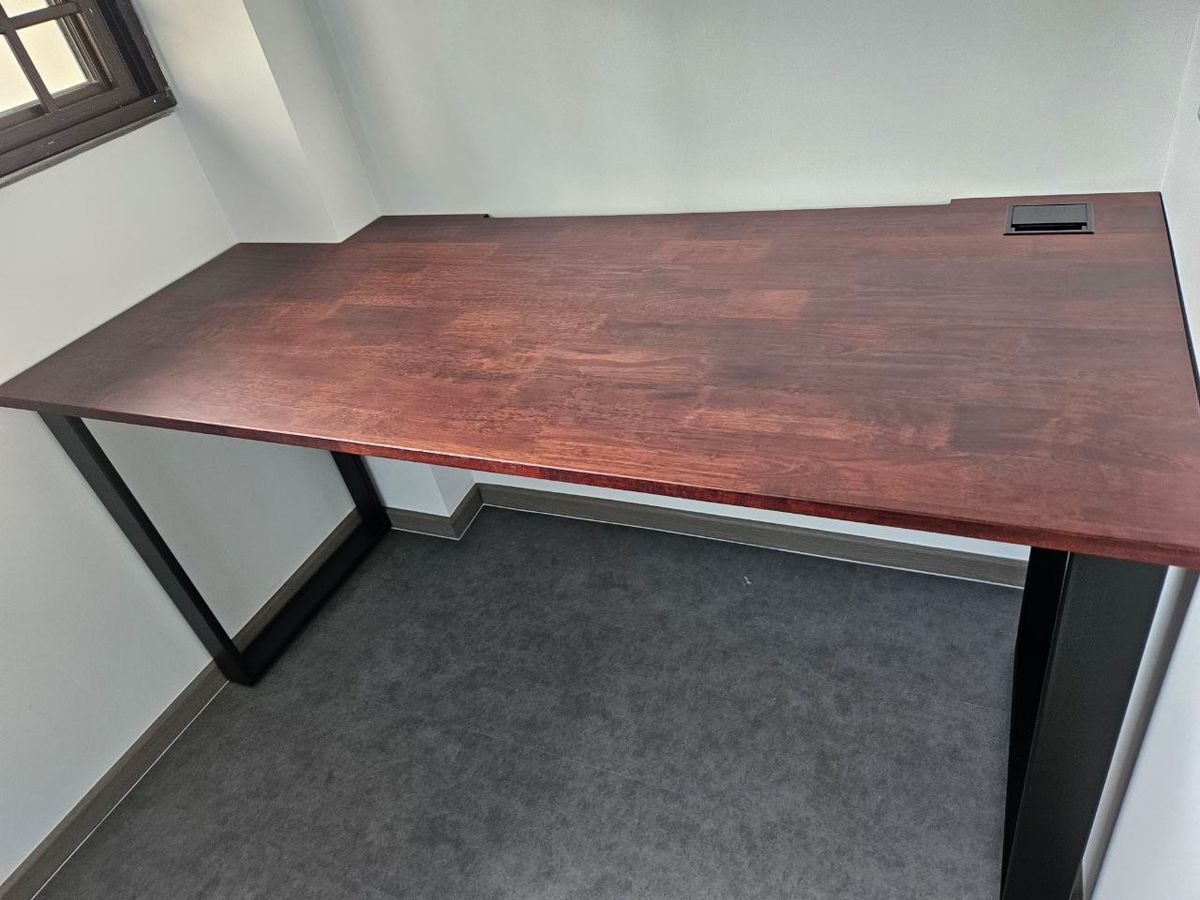
Solid wood vs plywood at a glance
| Solid wood | Plywood | |
|---|---|---|
| What it is | Real timber, full thickness | Thin veneer layers glued together |
| Edges | Grain runs over the edge | Layers show unless covered |
| Wear | Refinish many times | Thin top veneer limits sanding |
| Cost | Higher | Lower |
Durability: solid wood lasts longer
Solid wood is made entirely of natural wood, whereas plywood is made of several layers of wood veneer glued together. As a result, solid wood can withstand wear and tear better than plywood, and it can be refinished multiple times to maintain its appearance. On plywood, the decorative wood is only the thin top veneer, so it can only be sanded so far.
Appearance: grain you can’t copy
Solid wood has a timeless, classic appearance that adds warmth and character to any space. Its natural grain and texture create a unique, organic look that plywood cannot replicate, especially at the edges, where plywood shows its layers. Solid wood is also available in a wide range of species, finishes and styles, so you can create a look that fits your space.
We build in Hevea as standard, a durable hardwood, with premium woods such as walnut, oak and ash available, and Paulownia for shelving. Every piece has a matte lacquer finish. See woods and finishes, or see how Hevea compares with other woods.
Sustainability: a renewable resource that lasts
Solid wood is a renewable resource that can be sustainably harvested and replanted for future generations. Our standard Hevea comes from rubber-tree plantations in Thailand and Malaysia, where the trees are used for timber once they have finished producing latex. And solid wood furniture can last for decades, reducing the need for replacements and minimising waste.
Strength and stability
Solid wood gives a desk real strength through its full thickness: our tabletops are 2 cm or 3 cm Hevea. Plywood’s cross-layered build makes it a stable, predictable sheet material, which is why it is common in cabinets and building work. Solid wood, being natural, moves slightly with humidity; we finish every surface in matte lacquer and reinforce each desk to prevent sagging.
Which should you choose?
Plywood can be a cost-effective and practical choice for some applications. For furniture you use and see every day, solid wood is generally the better option for its durability, timeless appearance, sustainability and the fact that it can be refinished. See how we make solid wood tabletops.
Related reading: What does solid wood really mean? · Solid wood vs laminate
Common questions
Do you use plywood?
No. We build only in 100% solid wood, never laminate or MDF. Our standard wood is Hevea, a durable hardwood.
Can plywood be refinished like solid wood?
Only lightly. The wood you see on plywood is a thin top veneer, so heavy sanding can go through it. Solid wood can be sanded and refinished multiple times.