
Building a studio desk isn't just about wood and metal—it's about workflow. Whether you are a bedroom producer or running a professional facility, your desk needs to fit your gear perfectly, not the other way around.
At My-Desk.Co, every studio desk is precision-built to your exact specs. To help you design a workspace that fits your MIDI controller or digital piano like a glove, we have created the guide below to walk you through the process.
Building your Custom Music Studio Desk
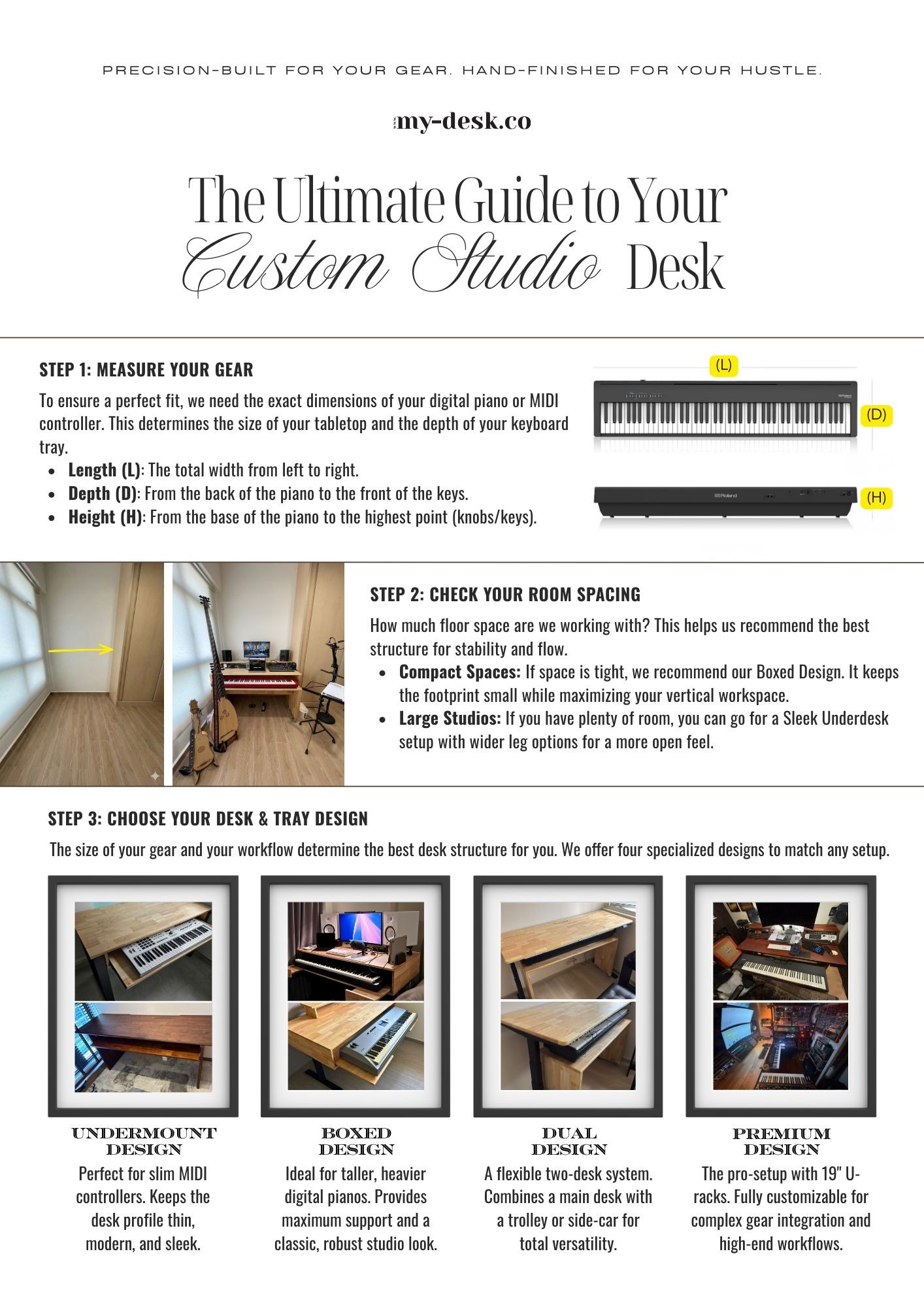
Step 1: Measure Your Gear
Before we build, we need to know exactly what we are housing. As you'll see in the guide below, the dimensions of your keyboard determine the size of your tabletop and the depth of your pull-out tray.
Grab your tape measure and get these three key numbers:
Length (L): The total width from left to right.
Depth (D): From the back of the piano to the front of the keys.
Height (H): From the base of the piano to the highest point (including knobs or keys).
Step 2: Check Your Room Spacing
How much floor space are we working with?
Compact Spaces: If space is tight, we recommend our Box Design. It keeps the footprint small while maximising your vertical workspace.
Large Studios: If you have room to breathe, go for a Sleek Underdesk setup. This allows for wider leg options and a more open feel.
Step 3: Choose Your Desk Design
Your workflow dictates the structure. We offer four specialised designs to match any setup:
Undermount Design: Perfect for slim MIDI controllers. It keeps the desk profile thin, modern, and sleek.
Box Design: Ideal for taller, heavier digital pianos. This provides maximum support and a classic, robust studio look.
Dual Design: A flexible two-desk system that combines a main desk with a trolley or side-car for total versatility.
Premium Design: The pro setup with 19" U-racks, fully customisable for complex gear integration.
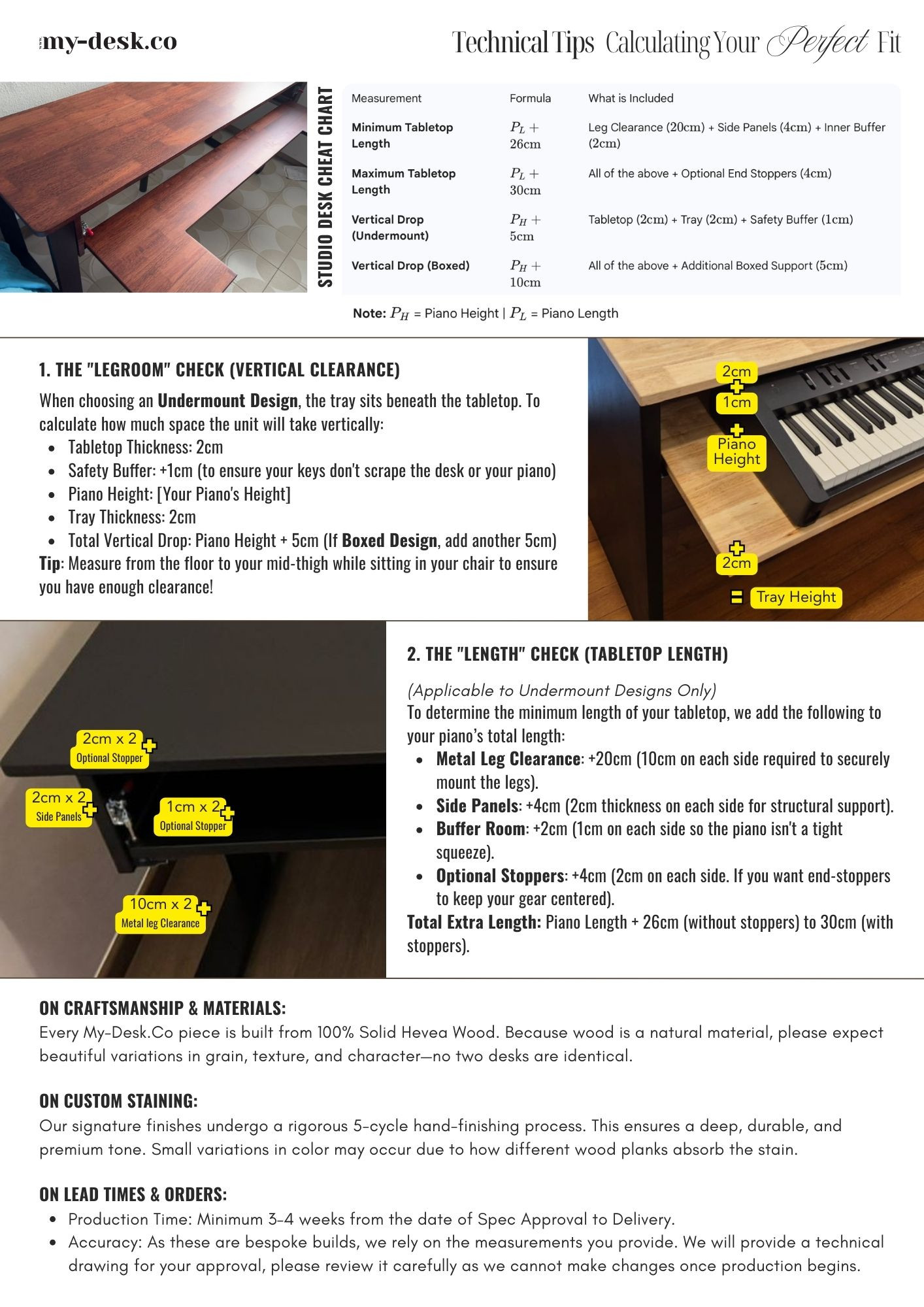
The "Legroom" Check (Critical!)
This is the most important step for your comfort. When using an Undermount Design, the tray sits beneath the tabletop, so we need to ensure it clears your knees.
Calculate your Vertical Drop: To find the total vertical space your desk will use, we add:
Tabletop Thickness (2cm).
Tray Thickness (2cm).
Safety Buffer (1cm).
Total Vertical Drop = Piano Height + 5cm. (Note: For Box Designs, we add an additional 5cm for support).
Pro-Tip: Measure from the floor to your mid-thigh while sitting in your chair to ensure you have enough clearance beneath the tray!
Craftsmanship & Materials
Every My-Desk.Co piece is built from 100% Solid Hevea Wood. We don't use veneers. Because wood is a natural material, you can expect beautiful variations in grain and texture—no two desks are identical.
Our signature finishes undergo a rigorous 5-cycle hand-finishing process to ensure a deep, durable, and premium tone for your studio.
Reference the Guide Below
Check out the visual guide below for the exact formulas and diagrams for your custom music studio desk. You can save these images to your phone for easy reference while you measure.
Related guides
- Undermount, boxed, trolley or hybrid: the four ways to fit a keyboard, with photos
- Piano desks with a pull-out keyboard tray
- Four sample piano desk drawings
See finished builds in our music studio desk collection, or send us your equipment list for a quote.