
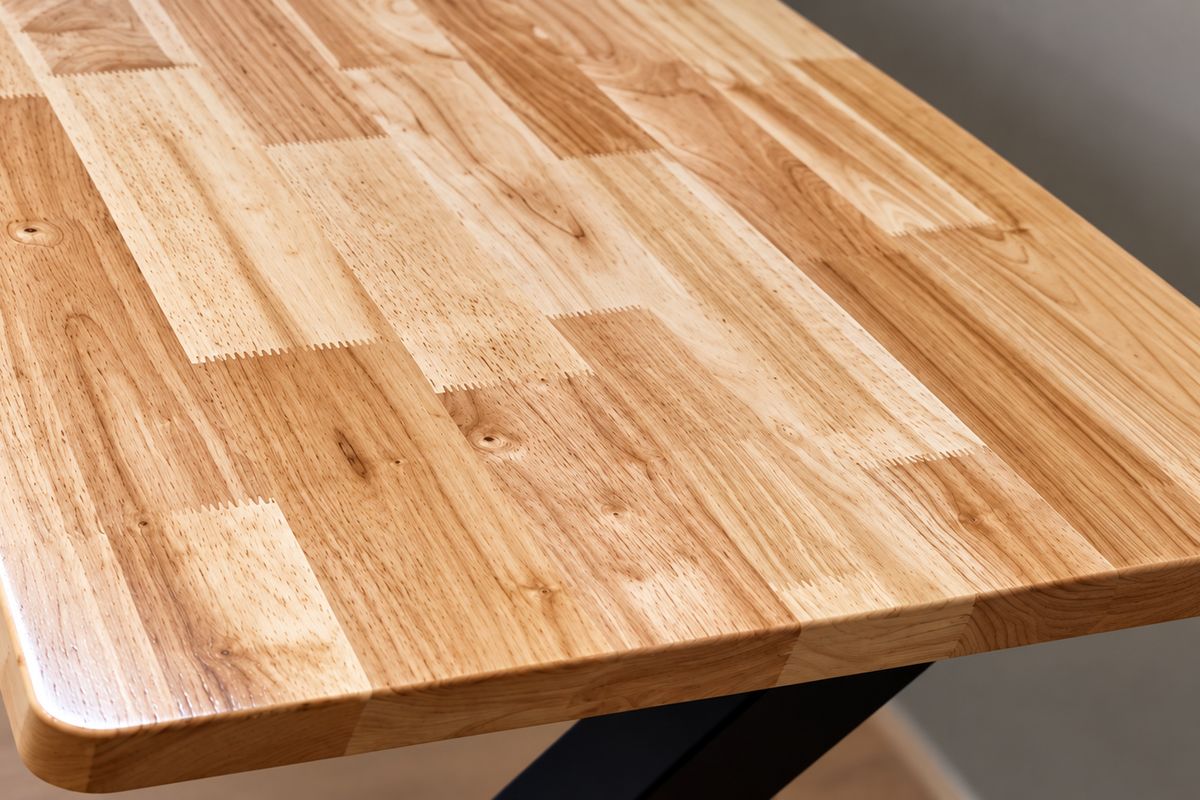
Short answer: for a light scratch on a lacquered solid wood top, start with a wood touch-up pen in a matching shade. A hard eraser can lift some marks that only sit on the surface. For anything deeper, send us a photo first: we can give you a small amount of matching stain to apply yourself, or refinish the top for a fee.
This guide is written for My-Desk.Co desks and tabletops, which have a matte lacquer finish. Most of it applies to any lacquered wooden table.
1. Look at the damage first
Light surface scratches need different treatment from deeper gouges. In good light, check whether the mark sits only in the finish or has cut into the wood, and whether it is a scratch, a dent or a stain. That decides which of the steps below to use.
2. Light scratches and surface marks
- Touch-up pen or wax filler stick. Repair kits for wooden furniture come with markers, wax sticks or filler pencils in different wood tones. Choose the shade closest to your stain, fill the scratch, then blend the edges with a soft cloth.
- Hard eraser. Some stubborn marks sit on top of the lacquer rather than in it. A hard eraser can lift them.
Try any product on a spot that doesn't show, such as the underside of the overhang, before you use it on the top.
3. Deeper scratches and dents
Not every scratch can be fixed at home. If a scratch has gone through the finish into the wood, a pen will only disguise it. Contact us with a photo. Depending on the size of the top and whether it needs collecting, we can provide a small amount of matching stain for you to collect and apply, or refinish the top for a fee.
Sanding a lacquered top yourself removes the finish along with the scratch, so the patch then needs staining and lacquering to match the rest. Please ask us before you sand.
Home remedies to skip on a lacquered desk
Olive oil and vinegar, a rubbed walnut and a steam iron are often recommended online, and this article used to list them. They are meant for bare or oiled wood. On a lacquered top, oil sits on the surface instead of soaking in, and heat and moisture are exactly what we ask you to keep off the finish, so we no longer recommend them for our desks.
Preventing the next scratch
- Use a desk mat under your keyboard, mouse and laptop, and coasters under cups.
- Lift heavy items instead of dragging them across the top.
- Clean with a soft, damp cloth, then dry the surface. Avoid abrasive sponges and harsh cleaners.
For everyday care, read how to care for solid wood furniture. If your desk is height-adjustable, caring for your adjustable desk covers the frame too. More answers are in our FAQ.